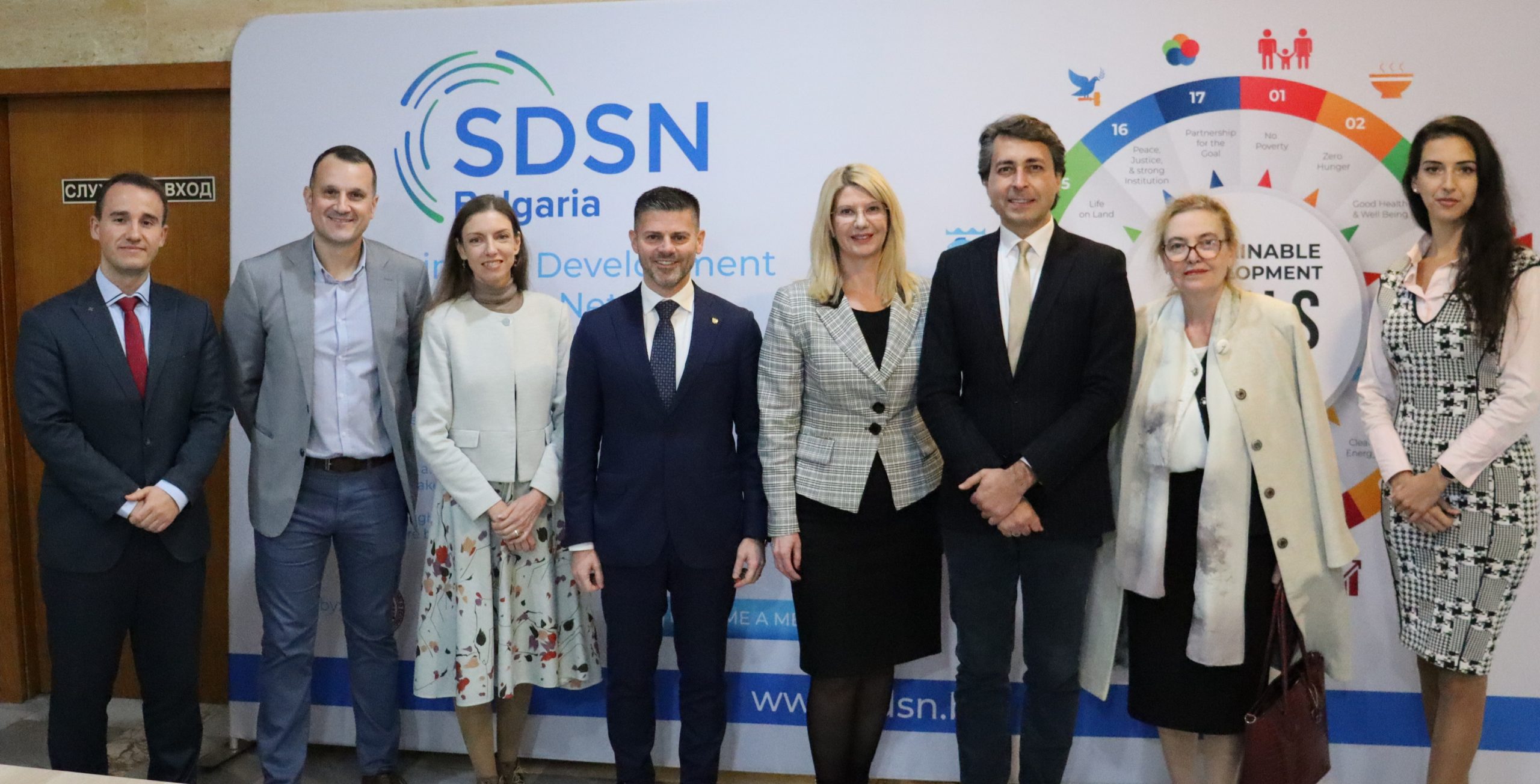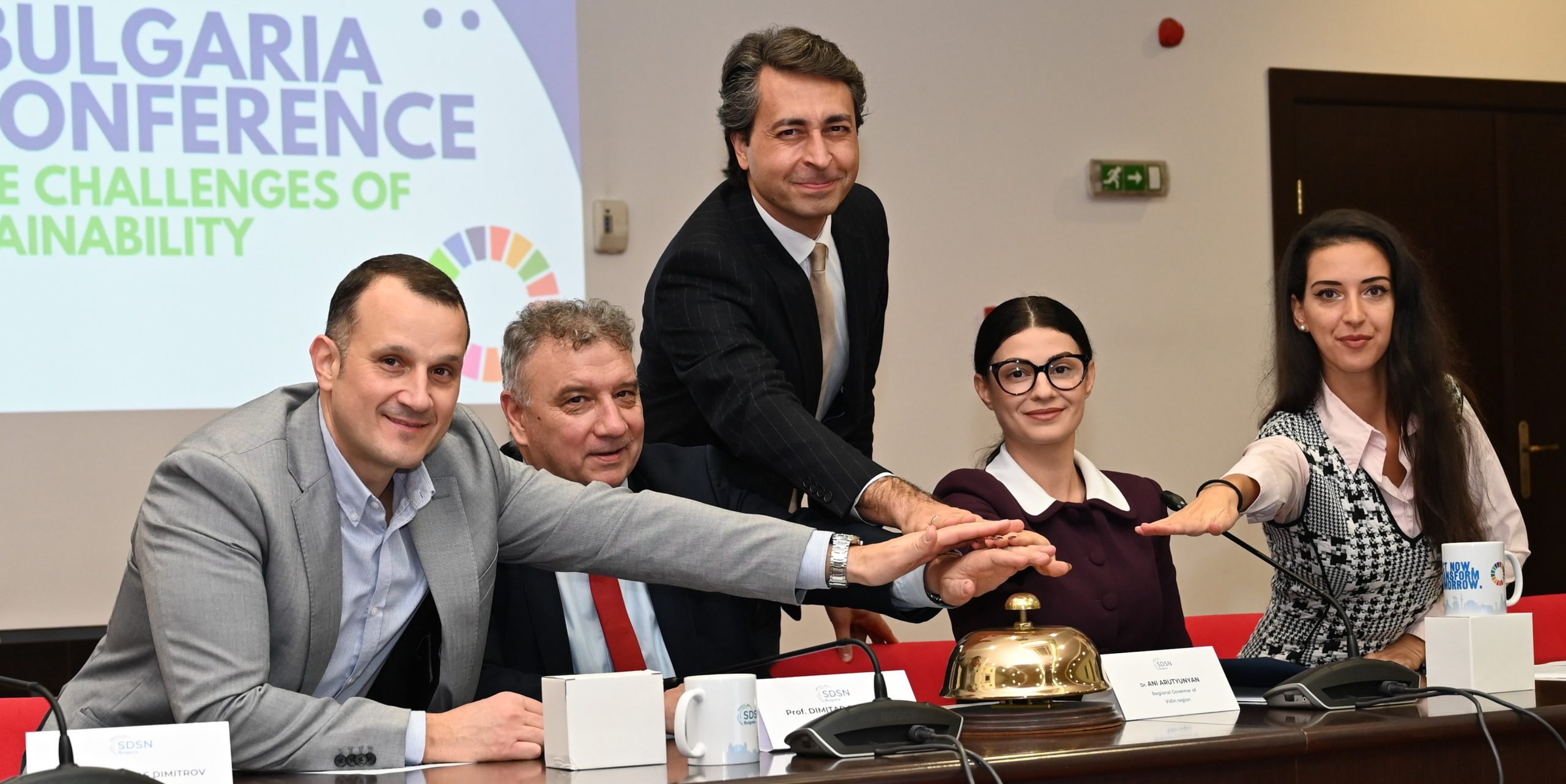
UNWE hosted SDSN Bulgaria Second Annual Conference
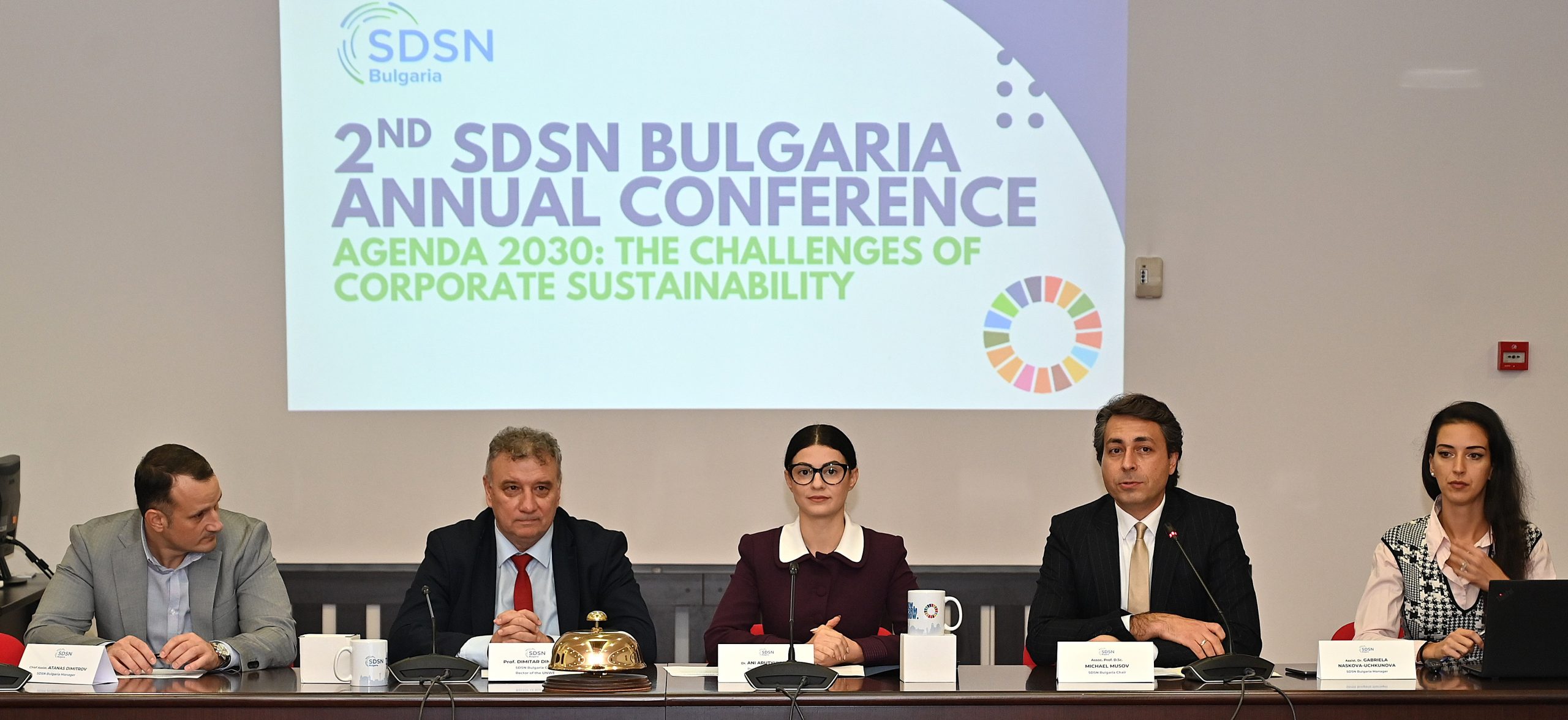
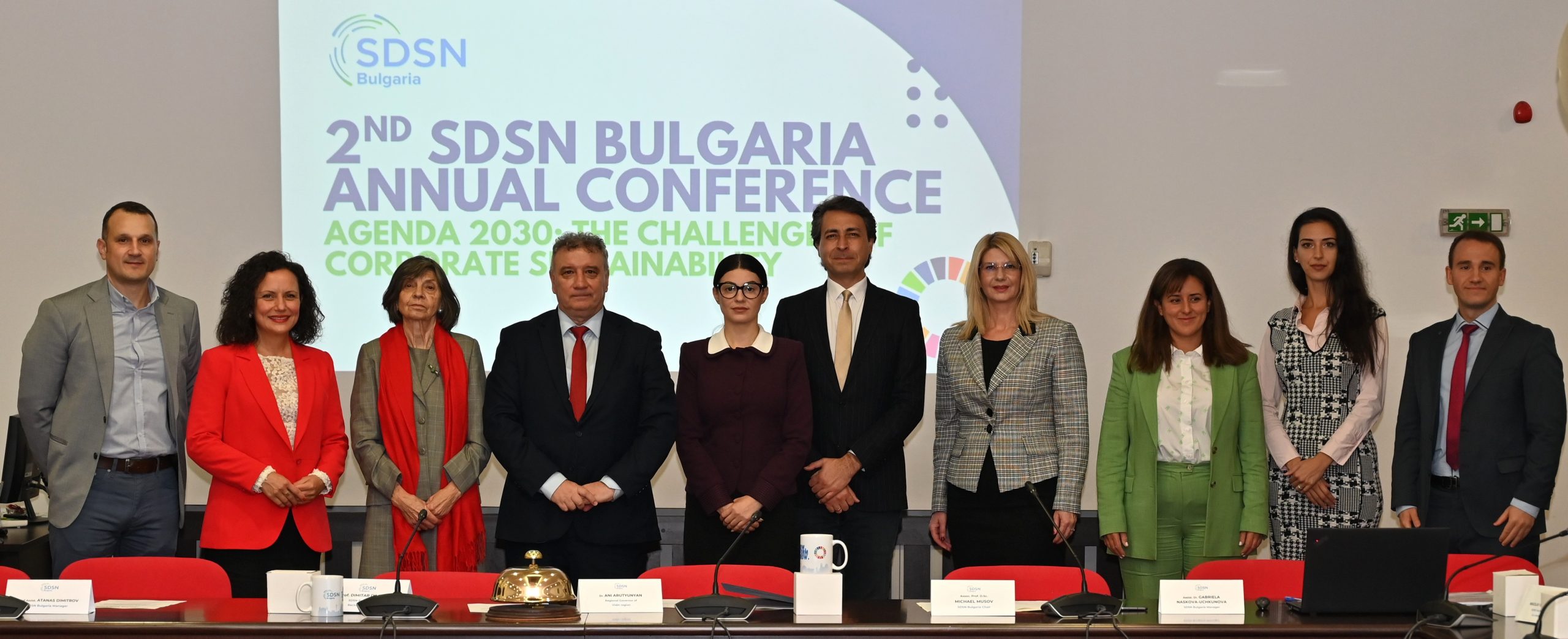
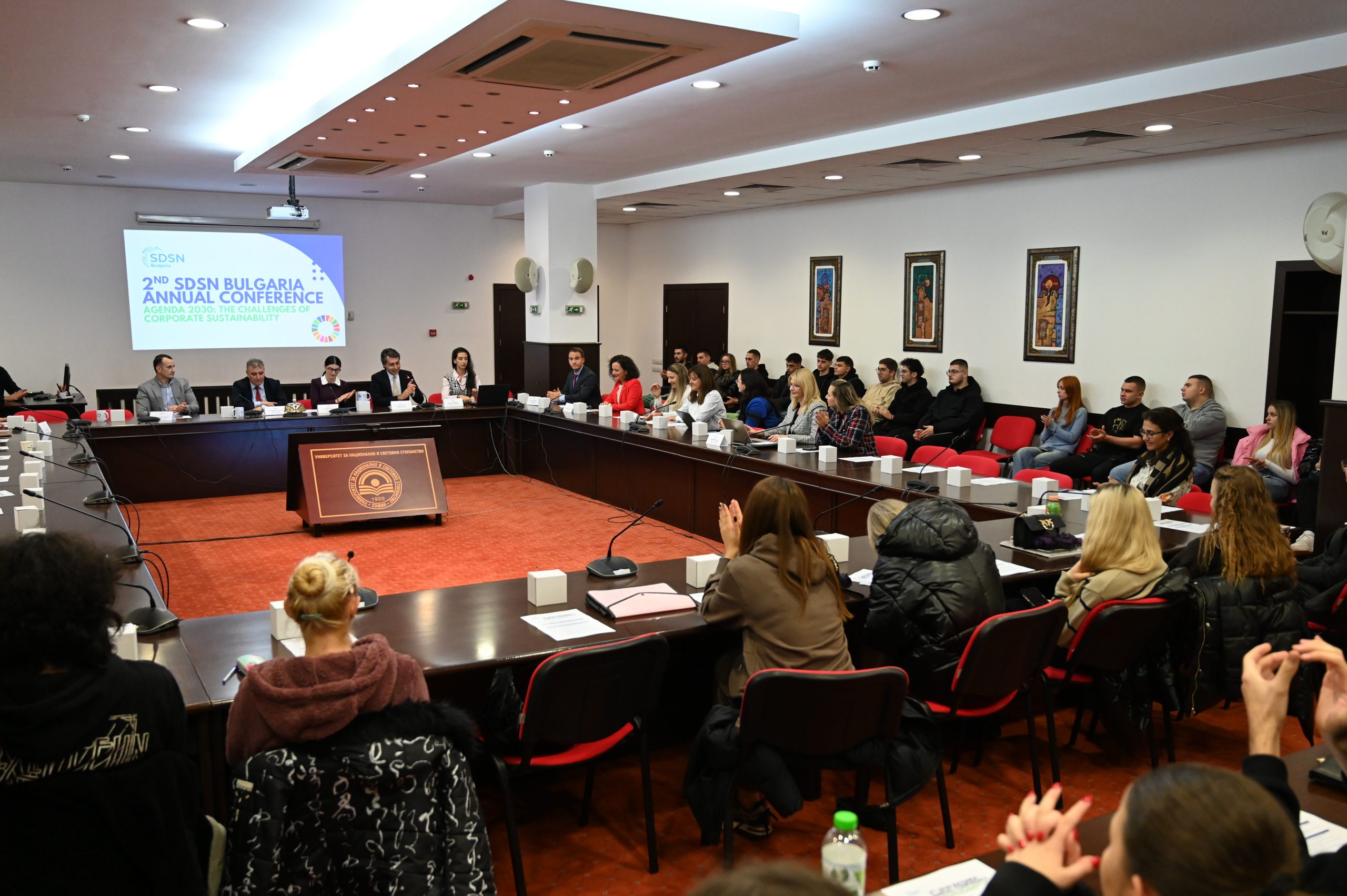
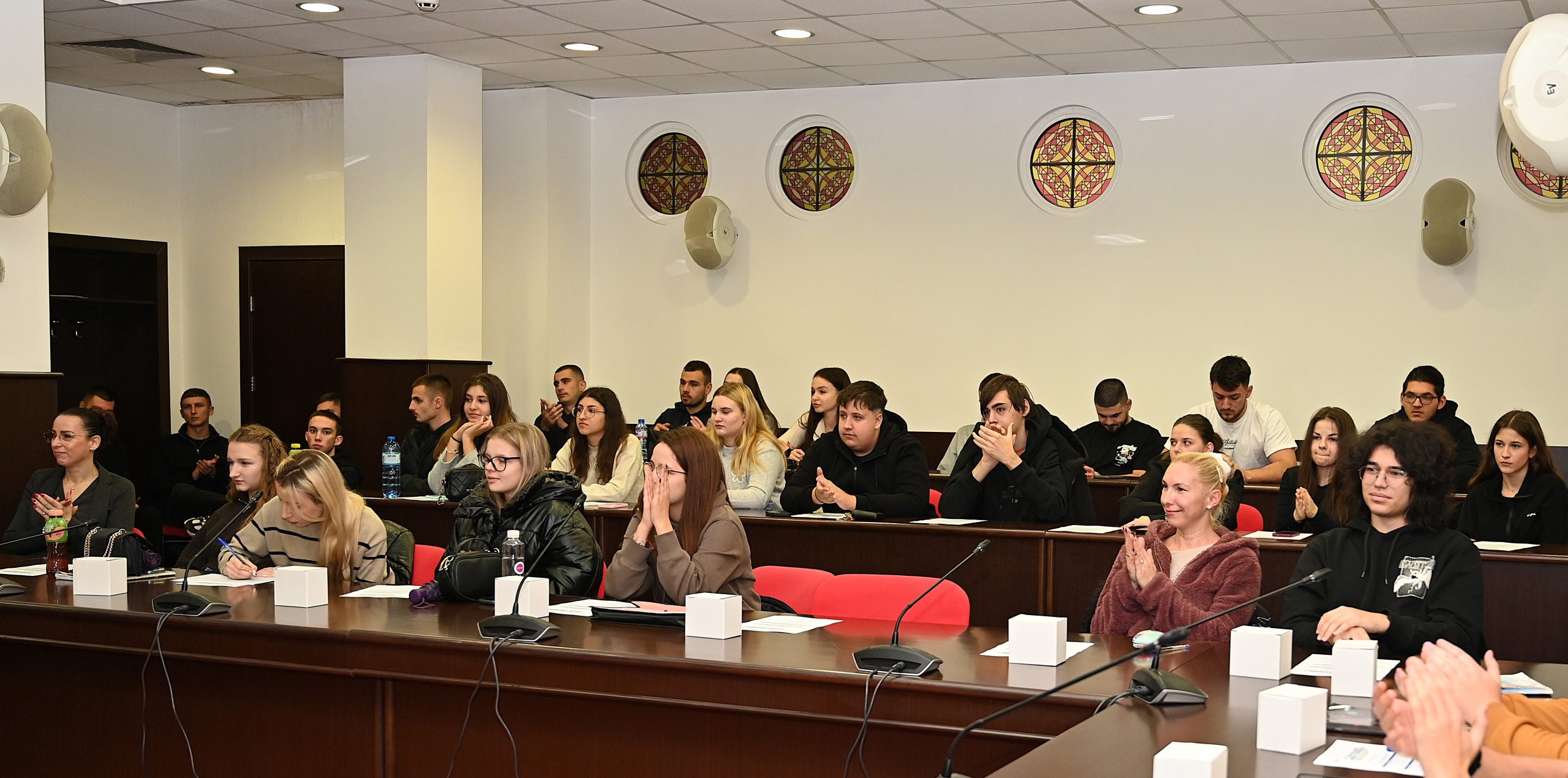
The National Sustainable Development Solutions Network (SDSN) Bulgaria, coordinated by the University of National and World Economy, held its annual international conference on 11 November 2025. The event, titled Agenda 2030: The Challenges of Corporate Sustainability, focused on the corporate sector’s role in achieving the UN Sustainable Development Goals and highlighted effective practices and solutions. More than 80 participants from academia, government, business organizations, and SDSN chapters in the Black Sea, Romania, Bulgaria, and Bulgaria Youth attended to discuss key challenges and explore solutions for sustainable development.
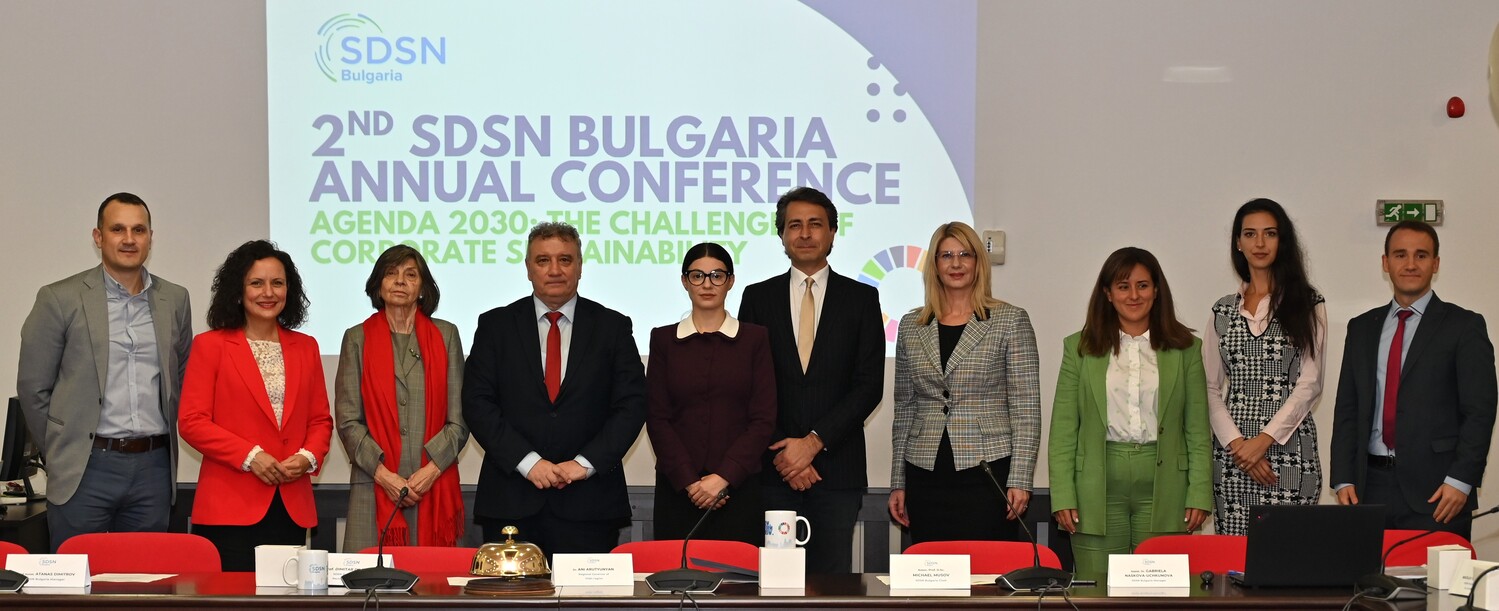
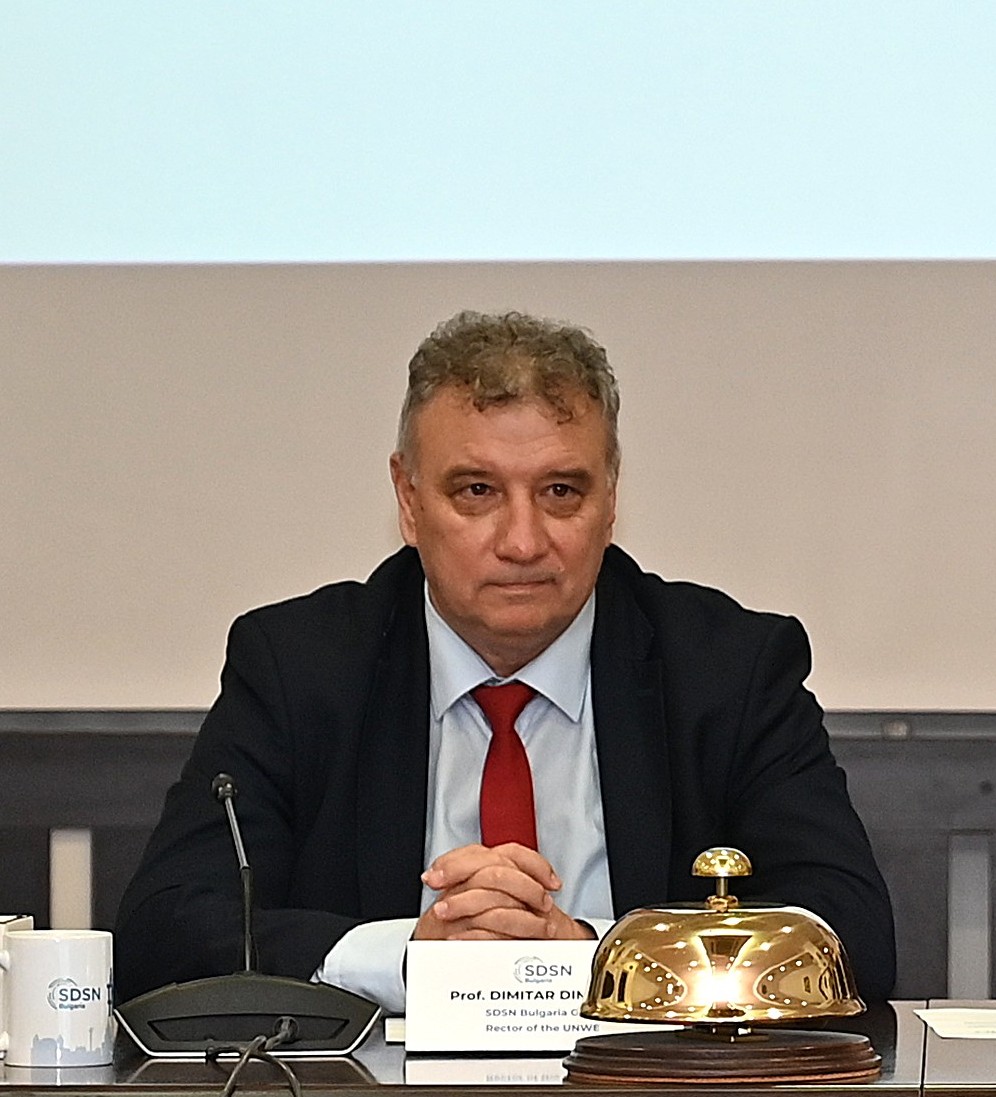
Prof. Dr. Dimitar Dimitrov, Rector of the University of National and World Economy, Co-Chair of SDSN Bulgaria, and member of the SDSN Networks Strategy Council, opened the conference. In his address, he highlighted the significance of the UN Sustainable Development Goals and the vital role universities play in achieving them. He encouraged students to actively seek solutions to global challenges, such as climate change and its effects on our planet.
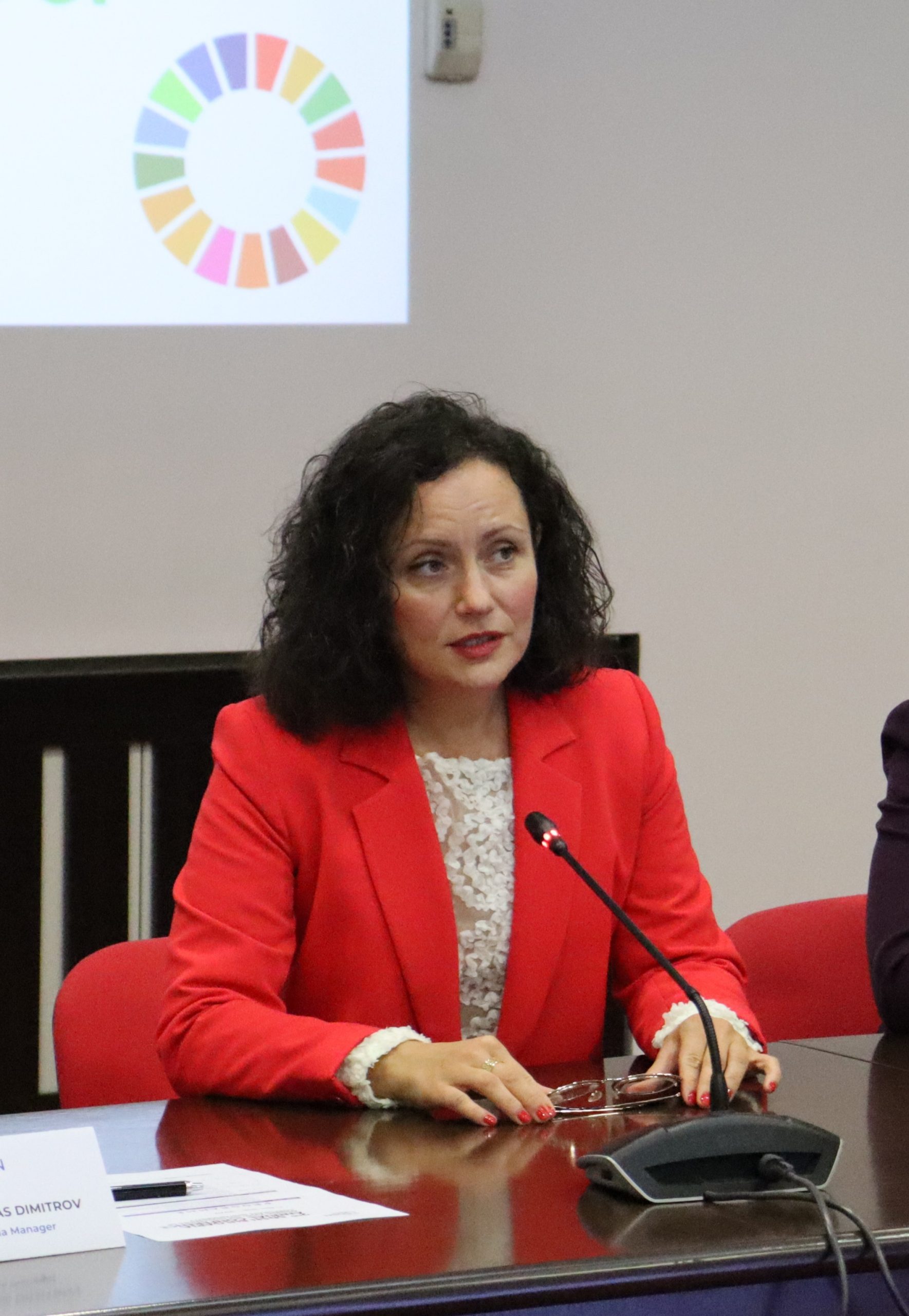
The regional governor of Vidin and a graduate of the UNWE – Dr. Ani Harutyunyan, welcomed the participants and attendees, highlighting the challenges and achievements of the Northwestern region in achieving sustainable development.
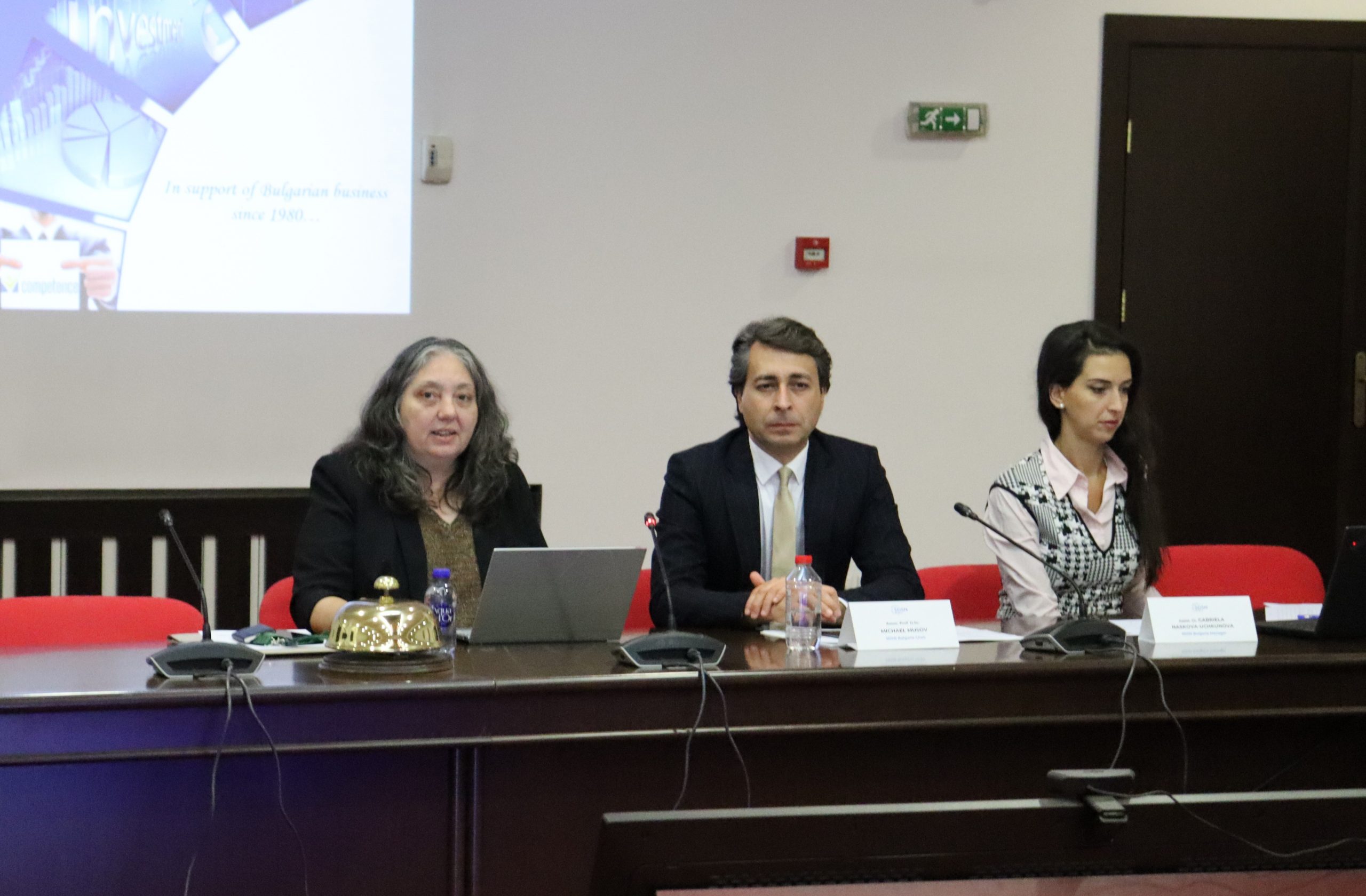
Greetings were also delivered by Assoc. Prof. Dr. Mihail Musov, Co-Chair of SDSN Bulgaria and member of the SDSN Networks Strategy Council, who was also the moderator of the opening part.
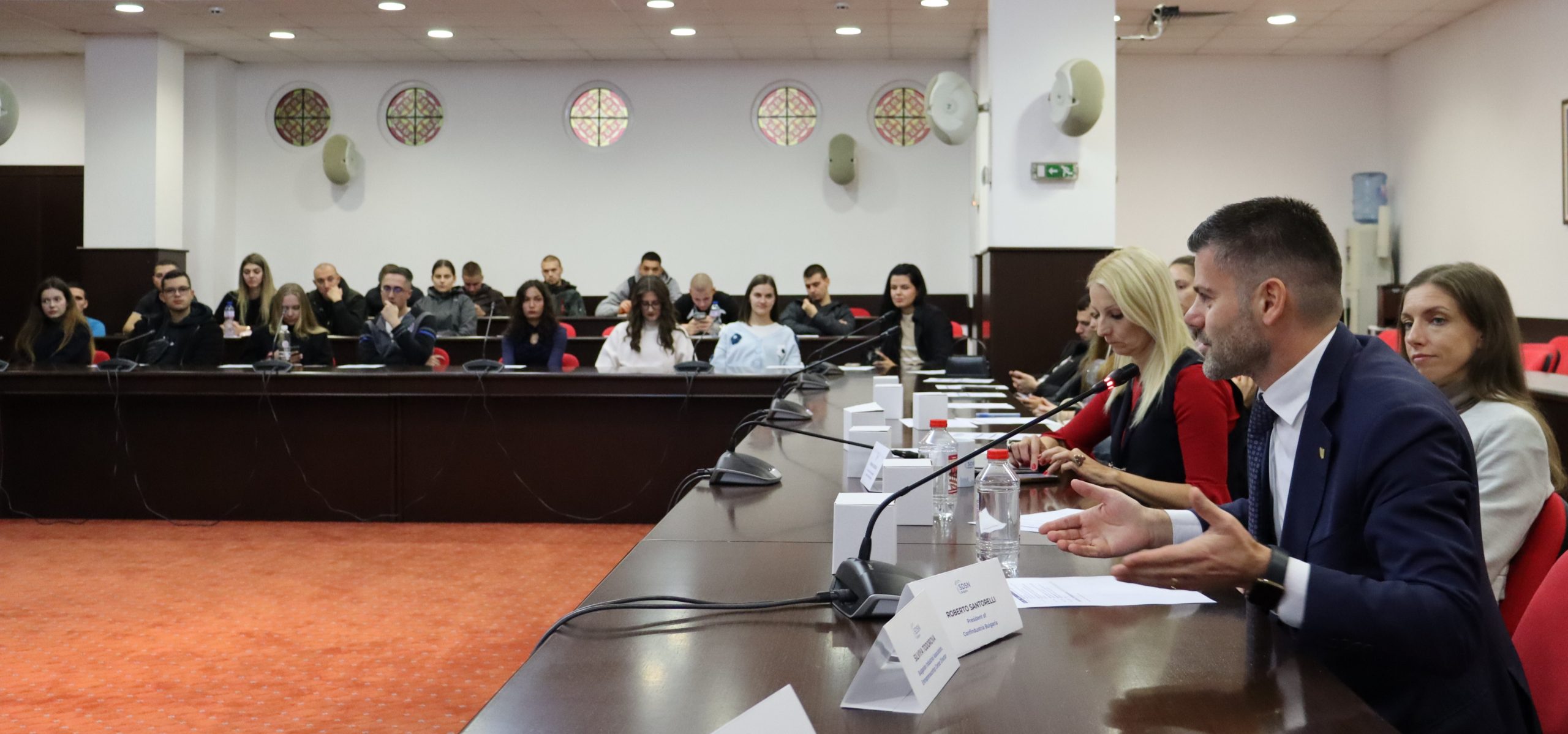
The event took place in two panels. The first included representatives from academia, and the second from the corporate sector.
Prof. Dr. Bistra Boeva, Emeritus Professor of the UNWE, presented the role of artificial intelligence in the implementation of the UN Sustainable Development Goals, outlining the main challenges, issues and potential solutions in this direction and invited students to be active participants in the process of achieving the 17 goals, especially within the framework of Goal 13 – Combating Climate Change.
Assoc. Prof. Dr. Elena Preda, Manager of SDSN Romania and lecturer at the Bucharest University of Economics, examined the role of the university in building capacity to achieve the Sustainable Development Goals and emphasized the place of students in this regard not only as learners, but also as participants in the search for and implementation of solutions.
The President of ASECU and member of the SDSN Black Sea Leadership Council – Prof. Grigoris Zarotiadis, delivered a report on the topic “Pursuing Sustainability in the Black Sea: the Role of Cross-National Institutions and Networks”, in which he highlighted ASECU’s activities within the framework of the implementation of the UN Goals and opportunities for students, such as summer and winter schools with a focus on sustainable development.
The risks of the transition to corporate sustainability were examined by Prof. Dr. Virginia Zhelyazkova, Head of the International Economics Section at the Institute for Economic Research of the Bulgarian Academy of Sciences and a lecturer at the University of Insurance and Finance – Sofia. She stressed the importance of building a financial architecture ready for climate change, including the creation of a stable system that integrates climate risk management, facilitates investments in climate adaptation and effectively mobilizes financing for sustainability and green development.
Prof. Dr. Hristina Nikolova, Head of the Department of Transport and Energy Economics at the University of National and World Economy and Editor-in-Chief of the magazine “Economic Alternatives”, introduced the audience to the hidden costs associated with transport management in the implementation of corporate sustainability strategies.
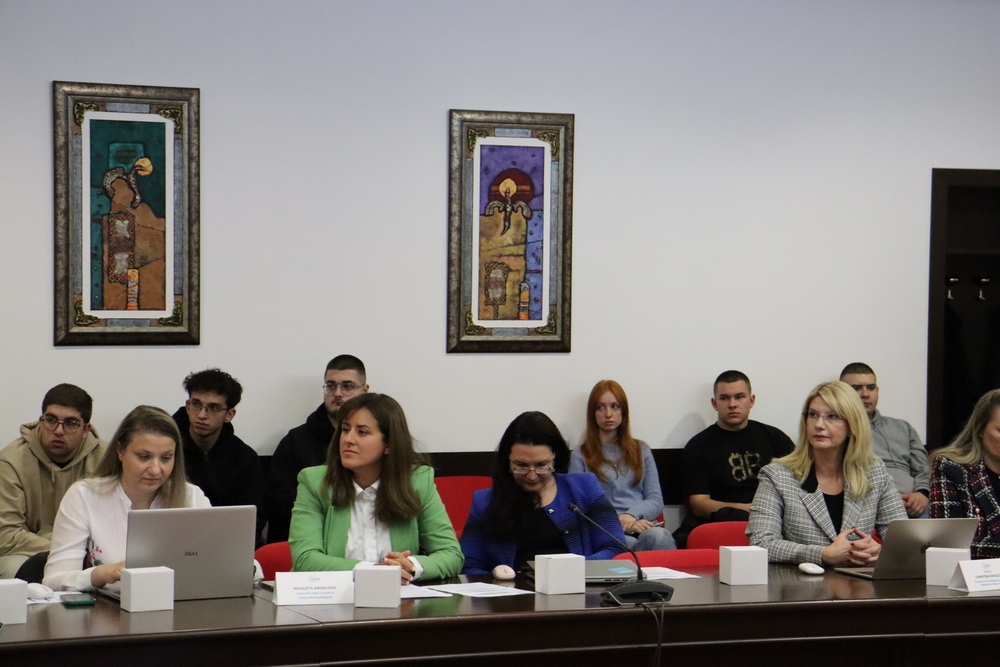
The second panel of the conference was reserved for representatives of the business community.
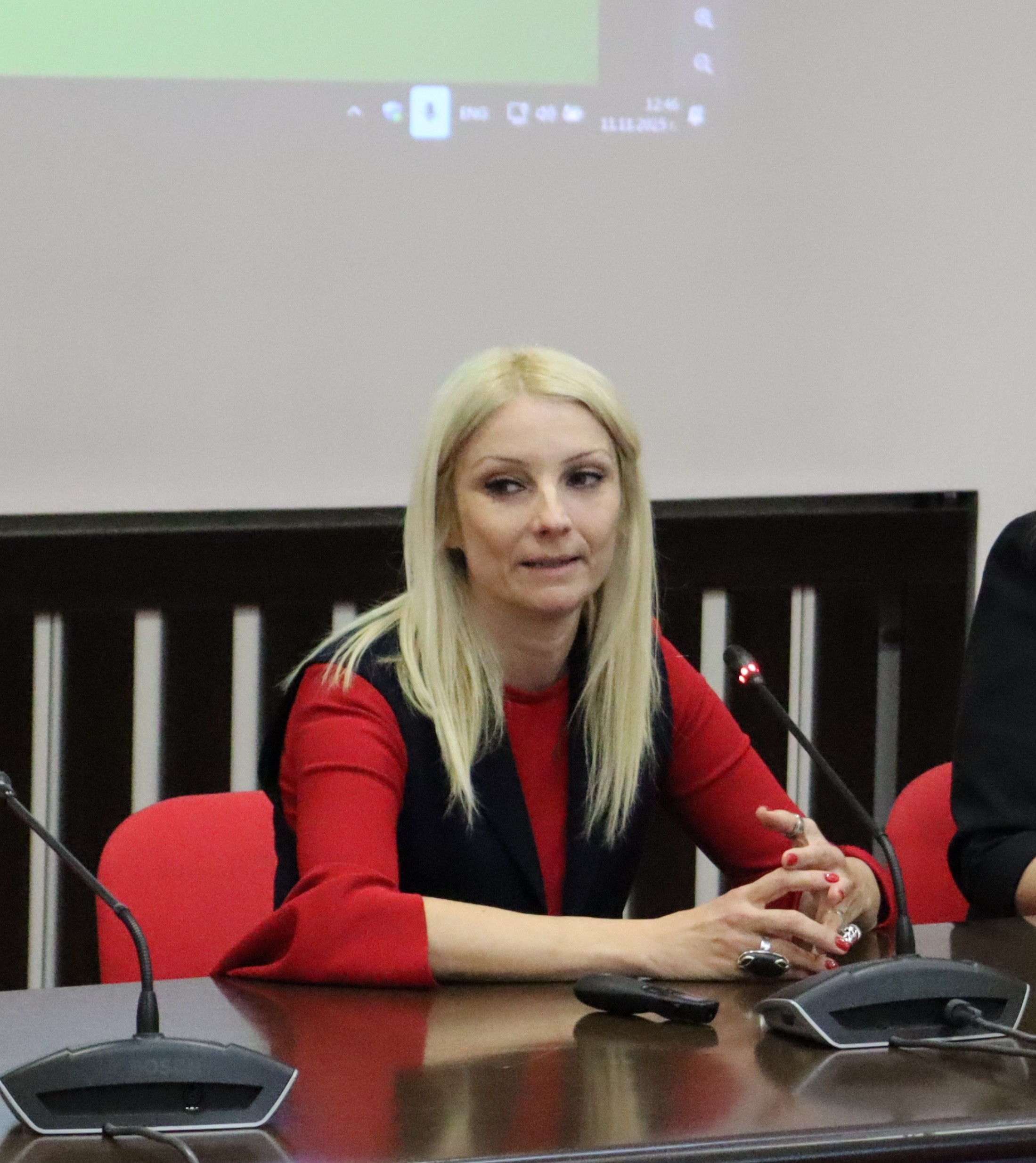
Silvia Todorova – Director of the Entrepreneurship Center at the Bulgarian Industrial Chamber, drew attention to achieving sustainability as part of the organization’s strategic development, taking into account the importance of corporate social responsibility and voluntary initiatives.
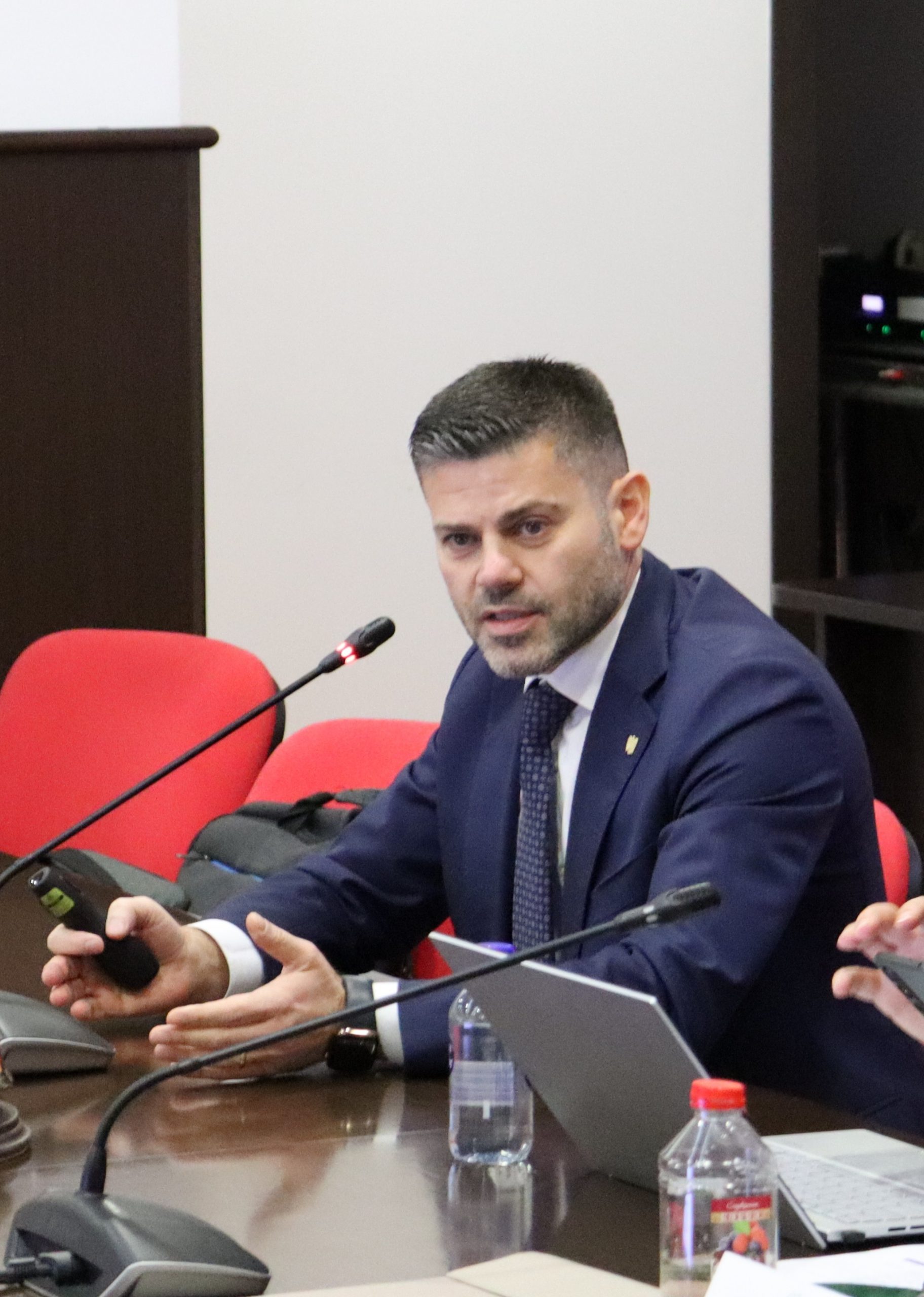
Roberto Santorelli, President of Confindustria Bulgaria, presented the role of associations in promoting ESG strategies in companies, highlighting the importance of the latter in economic and social terms. He pointed out some of the main challenges facing companies today in their efforts to implement the key components of the ESG framework – environment, social issues and governance, and noted the successes achieved in this regard by Confindustria at national and regional levels.
Kremena Georgieva, Head of Corporate Communications at Kaufland Bulgaria, emphasized in her presentation the best practices for achieving sustainability, giving an example of the company she represents and the relationship established with the UNWE in preparing personnel with the necessary knowledge and attitude towards the modern business environment and sustainable policies.
Nikoleta Angelova, Legal Counsel at Konica Minolta, emphasized the importance of actually achieving sustainability, pointing out the main differences between visible and measurable efforts and results and following sustainable policies “on paper”.
The conference ended with an open discussion.